Sakura’s TPLO recovery: the first night, the hard week, and finding our feet
My account of Sakura’s TPLO recovery: a difficult first night, food and water struggles, cone frustration, gradual progress, and a blank recovery log to adapt with your vet.
 By Juni B · Personal story · 14 min read
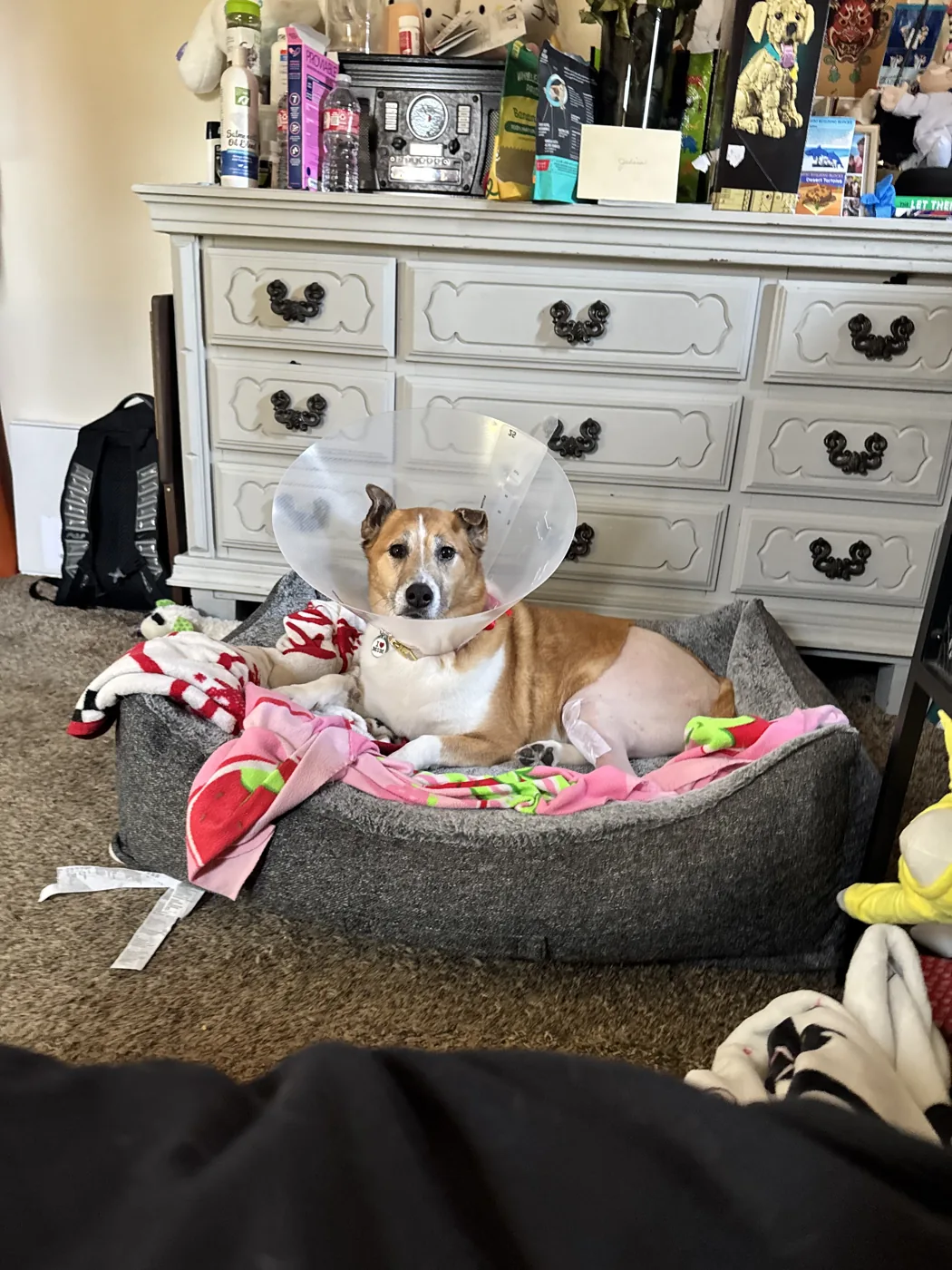
We went ahead with Sakura’s TPLO on May 29, 2026. The overnight stay we planned became a late-evening pickup, followed by a very difficult first night. My diary helped me track the small changes I might otherwise have forgotten. This is our experience, with a blank log for recording your own veterinary plan.
We went ahead with it. After all the worry I described in my post about deciding on TPLO surgery, Sakura had her operation on May 29, 2026. Dr. Vida was her surgeon. I was relieved that the decision was behind us, but I was about to learn that coming home was its own emotional chapter.
This is the beginning of our recovery story: the first night, the little changes I recorded, and the strange combination of exhaustion and hope that came with seeing her act more like herself again.
The overnight stay that did not quite happen
The vet gave us the option of leaving Sakura overnight for observation, including watching how she responded to medication. We chose that option. Having someone there to keep an eye on her sounded reassuring.
Sakura, however, is a velcro dog. That is an important detail in a story that involved asking her to spend the night away from us.
The clinic called at about 8:30 p.m., roughly two and a half hours after its usual closing time. They told us she was still crying despite the pain relief and sedating medication they had given her. I remember hearing her crying in the background of the call. That sound has stayed with me.
We went to pick her up that same evening. This was not the overnight plan we had pictured, but she was very eager and happy to see us and go home.
The first night home was hard
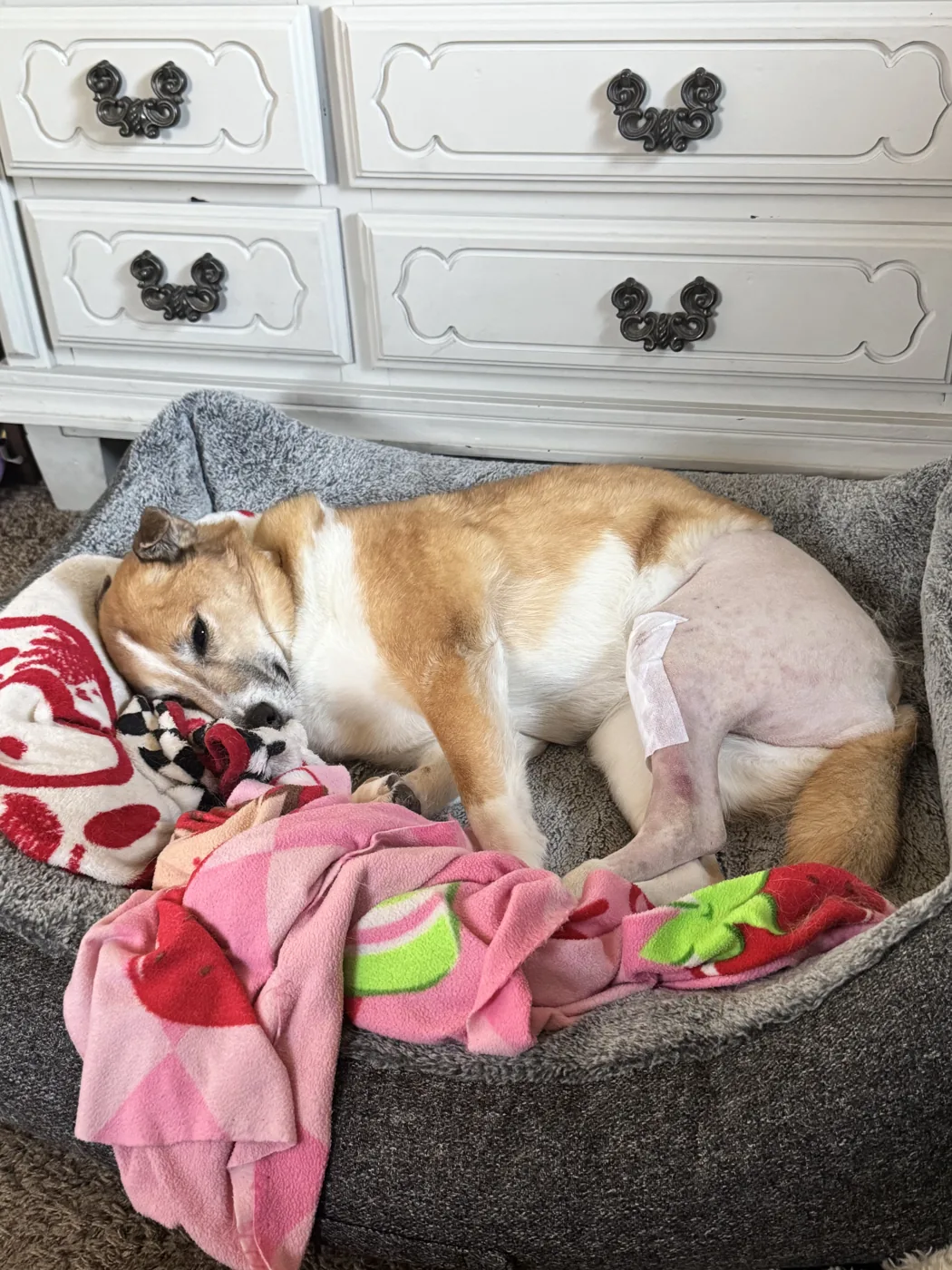
At pickup, she did not look obviously painful to me. I wondered whether excitement or adrenaline was carrying her through that moment. I cannot know that from how she looked, and being happy to see us did not prove she was comfortable.
We carried her upstairs to our second-floor home. Once we were inside, she became much quieter and kept whining. I offered a treat and water, but she was not interested in much water. Then came a night of crying and trying to work out what she needed.
We tried taking her out to her potty area. She mostly sat there, which felt understandable after everything that had happened. She also had a little accident. Her vet had warned us that an accident could happen, so we cleaned it up and carried on. She had enough to deal with without anyone making that a big event.
Nothing else was due to be administered at home on May 29 under the instructions we had been given. That is why my medicine log begins on May 30, rather than on surgery day itself. It does not mean she had received no medication at the clinic.
Food, water, and the first bowel movement
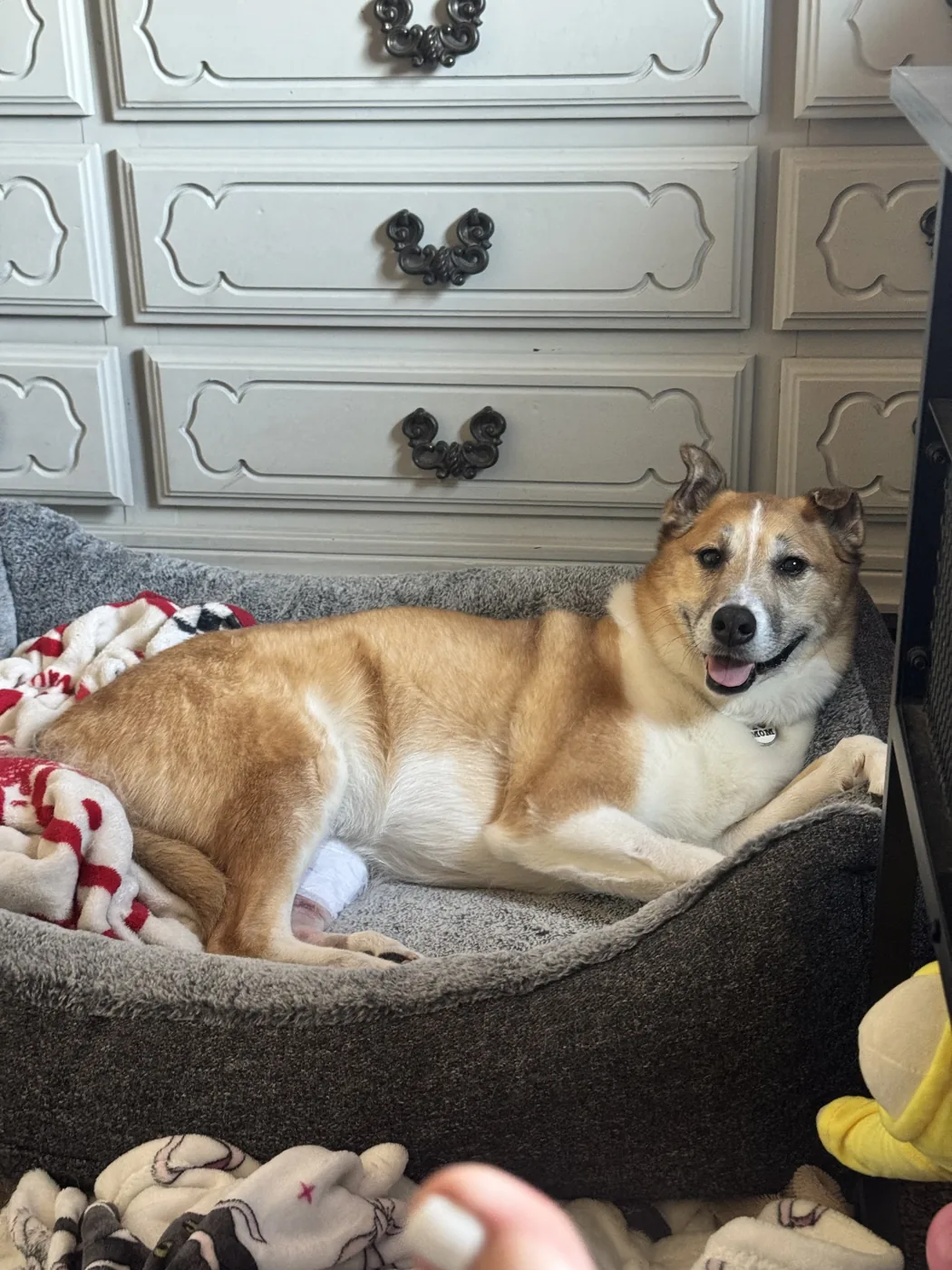
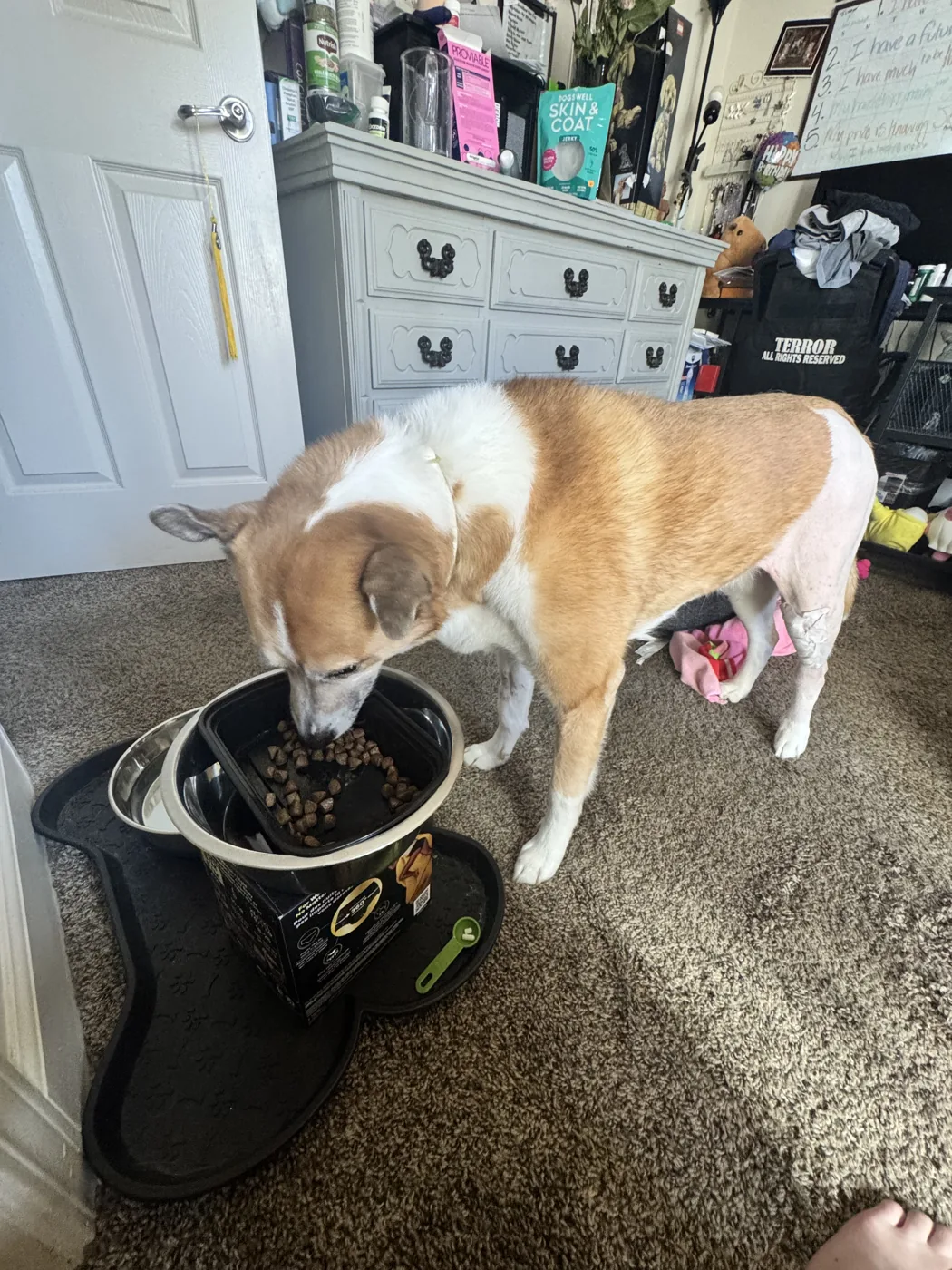
Standing up was difficult at first. I brought her food to her bed rather than expect her to get up and eat as usual. I did not have to spoon-feed her, but I did mix in wet food to encourage her appetite and add moisture to the meal. Smaller portions were easier for us to manage during those early days.
She was not keen on drinking from the big bowl initially, so I offered smaller amounts of water more often. In my memory, that sometimes meant roughly half a cup offered at a time. That was how I presented it to Sakura, not a daily water allowance or a target for someone else’s dog.
The log is more untidy than a neat hydration chart. Some entries say “slurps” or refer to a particular cup. Those were useful observations for me at the time, but I cannot turn them into accurate milliliters after the fact. I recorded what she accepted and kept watching for changes.
The first bowel movement recorded in the sheet is on June 1, three days after surgery. I remember how long that wait felt. The entry describes a slow start and then a solid bowel movement. I would not use that as a rule that every dog should wait three days; toileting problems, straining, or other concerns belong in a conversation with the veterinary team.
Bathroom trips were another part of the day that went into the log. I am not turning our entries into a universal number of outings. I needed a record of what actually happened for her.
What my recovery diary actually shows
I started a Google Sheets record because trying to remember several medicines, food, water, bathroom trips, sleep, and care tasks was too much to keep in my head. There were morning, afternoon, and evening sections, but the important part was recording what I had actually done or observed.
The original tabs run from May 30 through June 8. The carousel below is a readable summary of selected observations, rather than a medicine chart to follow. I have left out medication amounts and exercise instructions. Some notes were repeated across tabs, and the later days have fewer observations, so a blank cell does not mean everything was fine or that a treatment had ended.
The first full day home
This was a very difficult night, cough seemed to get worse.
The log records small amounts eaten and drunk, bathroom observations, and sleep interrupted by coughing.
A better night, with coughing still there
Better night tonight, only woke up once
I recorded waking at 2:45 a.m. and settling again around 3:40 a.m. The same note says she still coughed at night.
A bowel movement and small signs of progress
Seems to be more alert.
The first recorded bowel movement appears this morning. The sheet also records standing to drink and rehabilitation observations. A nighttime note describes restlessness before she settled.
Appetite returning, cone still frustrating
Shes back baby!
That was my food-column celebration. The same tab describes more alertness, disrupted settling with the cone, and difficulty tolerating some care tasks.
A new cough-medicine entry
She slept through the whole night after the cone issue was resolved.
Cerenia first appears as a column in the supplied tabs, with my notes labeling it for her cough. That does not establish when it was prescribed or prove how she responded to it.
More interest in food and movement
Happy to eat, stood up, finished all food.
The June 4 entry records standing to eat and resistance to ice. The June 5 tab also has meal and bathroom notes. Some narrative notes repeat across tabs, so they are not counted as separate events.
A record with limits
These later tabs mainly record medicine-related entries. Empty cells are not evidence that a symptom resolved, a task was completed, or a medicine was stopped. The displayed diary ends on June 8.
What I notice most when I read it now is how progress and frustration existed together. A better meal did not automatically mean an easy night. A dog who stood to drink could still find the cone uncomfortable. The small improvements mattered even when the whole day was not suddenly better.
A blank version of the log you can use
I wanted to share the organizing idea without sharing Sakura’s treatment as if it were a recipe. This blank version has space for your own veterinary instructions and your observations. It does not contain her medicines, doses, or physical-therapy routine.
Write each medicine’s name and instructions exactly as supplied by the prescribing veterinary team. Leave unused columns blank. Record what actually happened separately from what was planned.
Download the blank log (CSV) ↓
| Observation | Medicine 1 | Medicine 2 | Medicine 3 | Medicine 4 | Water offered / taken | Food offered / eaten | Bathroom observations | Comfort / sleep | Care task if prescribed | Notes / questions |
|---|---|---|---|---|---|---|---|---|---|---|
| Morning | ||||||||||
| Planned time / prescribed instructions | ||||||||||
| Actual time / observations | ||||||||||
| Given or checked by | ||||||||||
| Questions for the care team | ||||||||||
| Afternoon | ||||||||||
| Planned time / prescribed instructions | ||||||||||
| Actual time / observations | ||||||||||
| Given or checked by | ||||||||||
| Questions for the care team | ||||||||||
| Evening / night | ||||||||||
| Planned time / prescribed instructions | ||||||||||
| Actual time / observations | ||||||||||
| Given or checked by | ||||||||||
| Questions for the care team | ||||||||||
I would keep “planned” and “actually given” separate and write down who handled a task. One of my June 2 entries records finding a medicine hidden under her blanket and calling the vet for advice. That is exactly the sort of thing a completed check mark could have missed. An uncertain or missed dose is a reason to ask the prescribing team what to do, not improvise from this diary.
The cough, the cone, and trying to get some sleep
She coughed at night. My May 30 note says it seemed to be getting worse; the next night’s entry still mentions coughing, even though there was a little more sleep. Her team later prescribed another medicine for that concern. The June 3 tab includes a Cerenia column with my notes labeling it for her cough. That is a record of Sakura’s prescription, not a cough-treatment recommendation.
VCA’s post-operative guidance says a breathing tube can sometimes leave a mild cough, but persistent or worsening coughing warrants contacting the hospital. I cannot diagnose the cause of Sakura’s cough from my diary, and I would not assume that explanation for another dog.
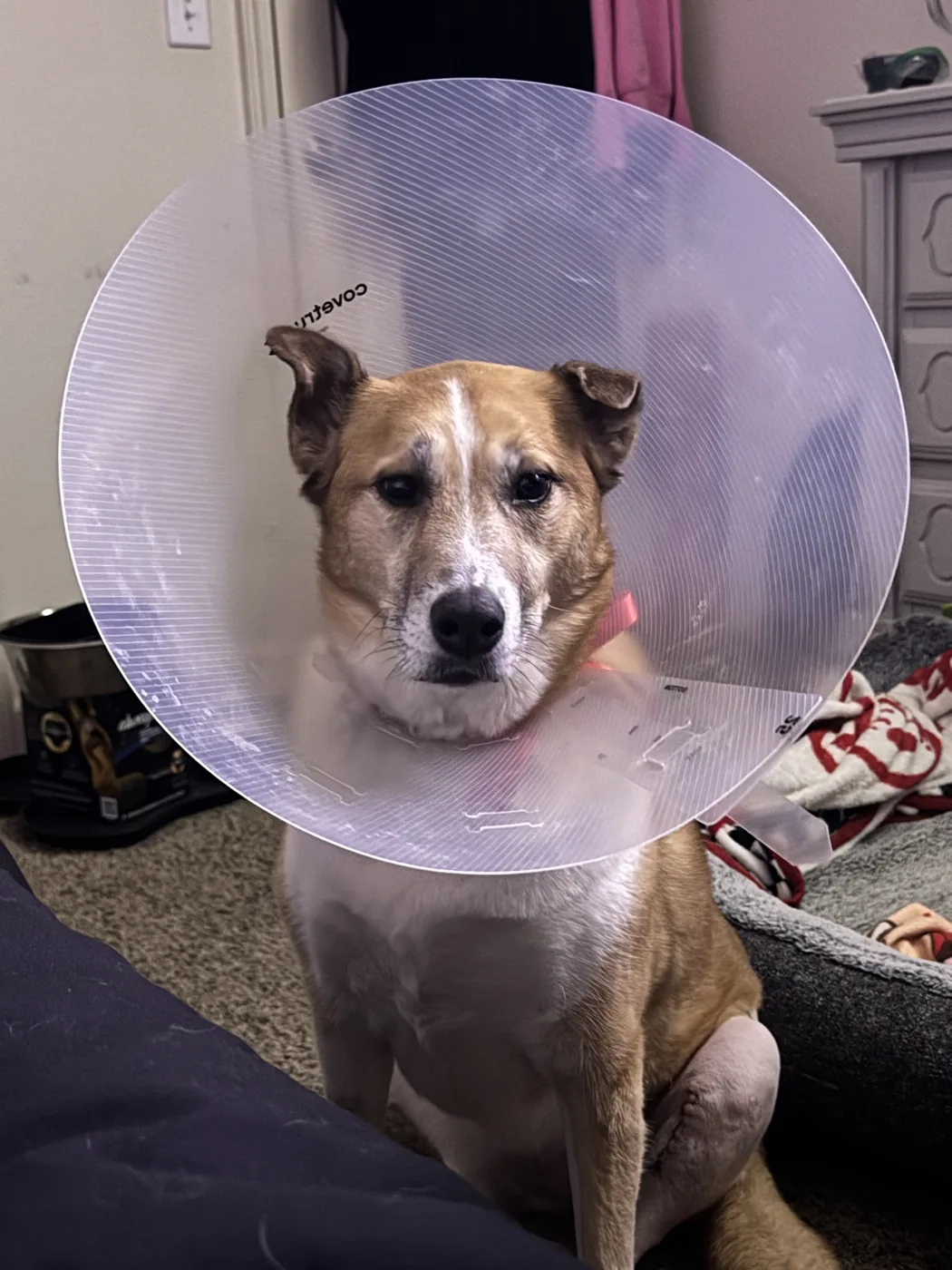
The clear cone in these photos was given to us by the vet. It was hard for her to settle comfortably in it. Some nights the problem seemed less like finding a sleeping position and more like negotiating with a lampshade.
I wondered whether an inflatable collar might have been more comfortable. We did not establish that it would safely protect her particular incision, so I am not recommending it as a replacement. If a protective device is making sleep, eating, or drinking difficult, I would ask the clinic to check its fit and suggest an option that still prevents access to the wound.
Rehabilitation and the ice-pack negotiations
My June 1 log already contains rehabilitation observations, including standing and movement exercises. That is the earliest dated record I have shown here. I am keeping the dates from the diary rather than presenting my memory of “about a week” as a precise starting instruction.
Those exercises were part of Sakura’s own care, and the exact start date, movements, repetitions, and limits should come from the professionals treating the individual dog. This post does not teach the exercises or invite anyone to move a painful joint based on a screenshot.
She was not a fan of the ice. Some entries record that she tolerated it; others make it very clear she did not. One June 4 note says she tried to get away. It was frustrating, especially when I was tired and wanted to do everything right.
That frustration is part of our story, but I would not turn it into advice to force an uncomfortable dog through a task. I would take resistance or distress back to the rehab team and ask them to check comfort, technique, and the plan.
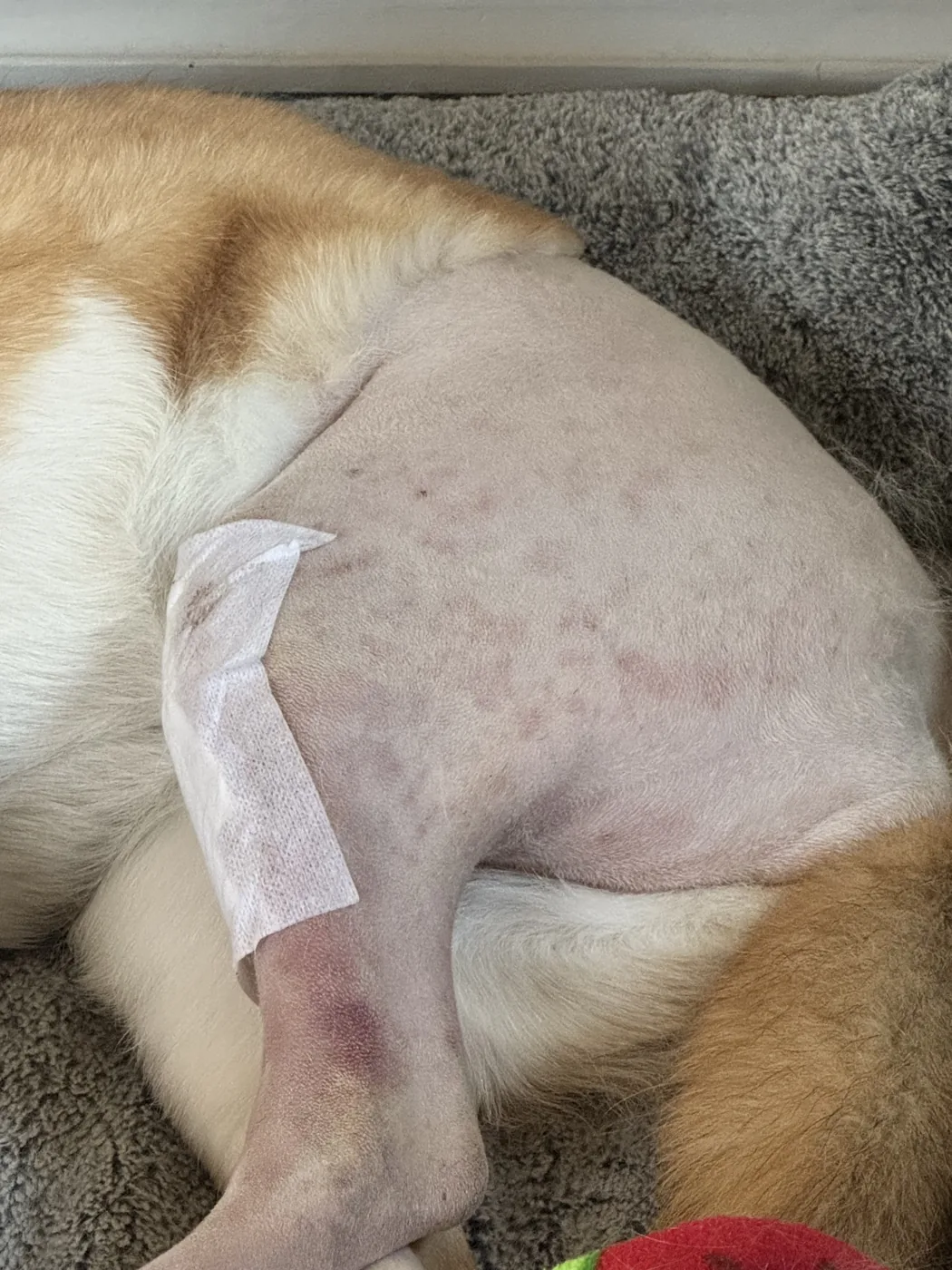
View Sakura’s incision-area photo
How I handled the later medicine changes
The diary includes names such as trazodone, gabapentin, Deramaxx, and cefpodoxime, with another medicine added later. The names explain why I needed a tracking system; they do not form a recommended prescription list.
Around the two-week point, as I remember the conversation, her rehabilitation clinician said we could reduce trazodone depending on how Sakura was doing. We reduced the trazodone. Gabapentin remained part of her pain-management care. This later conversation is my recollection; it falls beyond the May 30–June 8 log displayed above.
I also paused her Cosequin because I was worried about interactions, while continuing the salmon oil I had described in the earlier post. I am sharing that as something I did, not establishing that either choice was necessary or interaction-free. Supplements belong on the medication list too. VCA’s fish-oil information notes potential medicine interactions, including with some anti-inflammatory medicines, so I would have the prescribing team review the exact combination.
Seven days later, her enthusiasm was ahead of her recovery
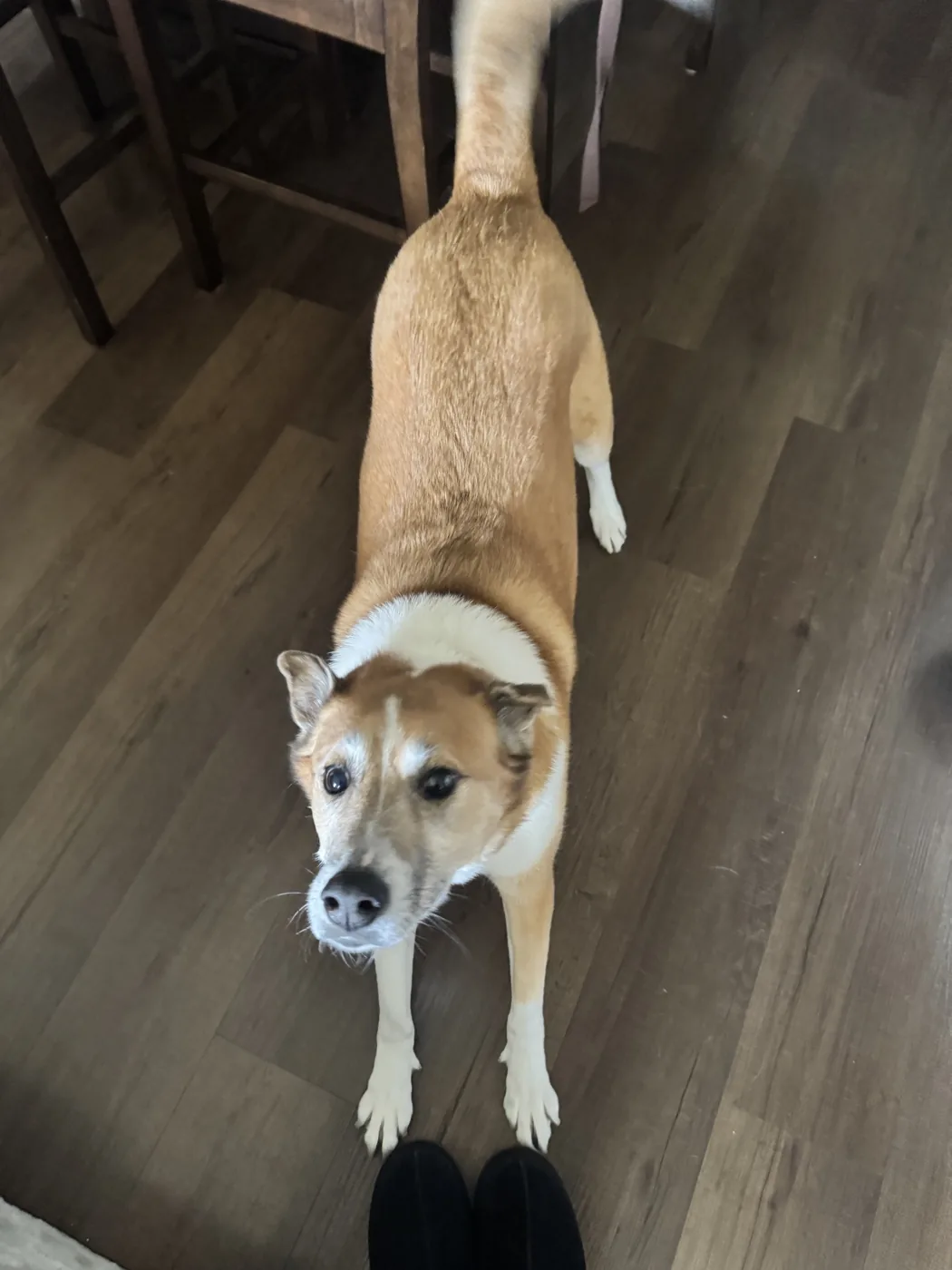
After about seven days, she was acting so much more like herself. I do not know whether Dr. Vida had a magic touch or Sakura was simply determined to resume normal dog business. What I do know is how good it felt to see her enthusiasm returning.
She wanted to run. She wanted to jump. We could not let her. Feeling more like herself was not the same thing as being cleared to act like nothing had happened.
RCVS Knowledge explains that the bone still needs to heal after TPLO, and exercise must remain controlled under the surgical plan. That distinction mattered when Sakura’s confidence started recovering faster than her restrictions were ending.
There was hope inside the hard week
For me, the first week was the hardest. That does not mean everyone will have the same turning point, or that a dog who needs longer is doing badly. It means that, in our house, the earliest nights felt much longer than a calendar could possibly justify.
The diary helped me see changes when I was too tired to trust my memory: a better meal, standing to drink, a more settled stretch of sleep, a familiar expression. None of those moments erased the need for follow-up care. They did make the next night feel a little less endless.
If you are in that difficult beginning with your own dog, I hope our story offers some company. Ask for help when you need it, keep your own care team involved, and do not measure your dog against a photograph of Sakura looking cheerful.
You can read the decision that came before this diary, meet Sakura, or meet April, her very attached sister. This is an early recovery chapter, not a report that Sakura had completed bone healing or received final activity clearance.